Our BMO Ride for Cancer community is rallying around our next ambitious goal: raising the final $325,000 needed to complete the QEII Foundation’s support of BreastCancerPEP — a groundbreaking new clinical trial that has the potential to transform how patients experience breast cancer treatment and care.
BreastCancerPEP is a first-of-its-kind, six-month patient empowerment program that will bring evidence-based support directly into patients’ homes while rigorously evaluating its impact through a province-wide clinical trial.
For riders and their supporters, this is an opportunity to help build the future of cancer care in Nova Scotia.
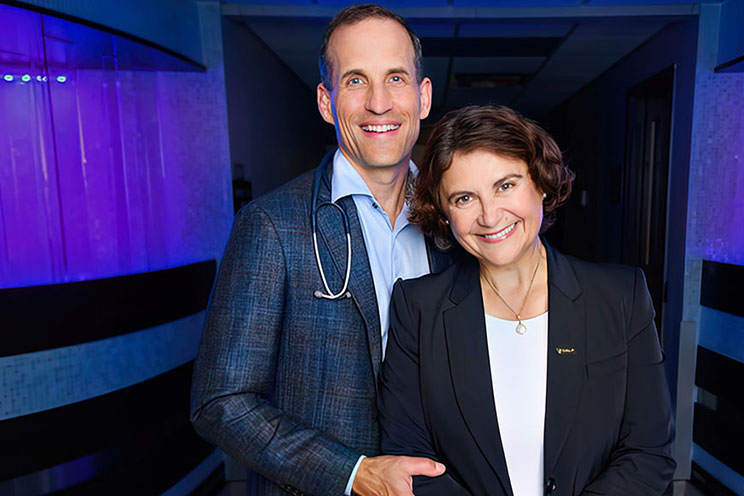
We sat down with husband-and-wife team, Dr. Rob Rutledge, QEII radiation oncologist, and Dr. Gabriela Ilie, scientific lead of BreastCancerPEP, to learn why this innovative program matters, how it will support patients, and how our BMO Ride for Cancer community will play an essential role in bringing it to life.
Q: In layman’s terms, what is BreastCancerPEP?
Dr. Ilie: BreastCancerPEP is a six-month, digitally delivered patient empowerment program —PEP — designed to support women through every stage of breast cancer treatment. Every day, patients will receive practical guidance focused on physical activity, arm exercises, nutrition, sleep, stress management and emotional wellbeing, helping them build healthy habits that support their recovery.
Dr. Rutledge: Cancer care doesn’t stop when someone leaves the hospital. Medical treatment is incredibly important, but patients also need support for everything that happens between appointments.
Q: Why is a program like this needed?
Dr. Rutledge: Every Monday morning as I walk into the room of someone who has a recent breast cancer diagnosis, what I’m seeing is what I call a bad case of the ‘W’s’. They’ve been waiting for a very long time. They’re worrying about what’s going to happen. They’re wondering what they should be doing.
Our healthcare system provides excellent medical care, but many patients are left to navigate the emotional, physical and social challenges of cancer largely on their own. There are so many things people can do to improve their health and quality of life during treatment, but too often they don’t have the guidance or support they need.
Q: What will participating in BreastCancerPEP actually look like?
Dr. Ilie: Every morning, participants receive short video-based guidance that we deliver directly into their homes. Throughout six months, they’ll learn practical, evidence-based strategies they can apply immediately, while also connecting with healthcare professionals and fellow participants through live monthly sessions.
Dr. Rutledge: One of the most powerful aspects of the program is that patients don’t feel like they’re facing cancer alone. While the structured program lasts six months, the community doesn’t end there. Participants remain connected to the program and to one another as part of an ongoing network of support and survivorship — building relationships, sharing experiences and continuing to encourage one another well beyond treatment.
Q: BreastCancerPEP may be new, but the patient empowerment model behind it has already been developed here in Nova Scotia and is now supporting cancer patients around the world. Can you tell us about that success?
Dr. Ilie: BreastCancerPEP builds on years of research and earlier patient empowerment programs we’ve developed for prostate cancer and other cancer populations. Those programs have demonstrated meaningful improvements in physical health, psychological wellbeing and overall quality of life.
One example is PC-PEP, which is now offered to prostate cancer patients as part of standard care here in Nova Scotia and has expanded to hospital and cancer centre partners internationally, including New Zealand, Belgium, Romania and South Africa, with additional collaborations continuing to grow.
Dr. Rutledge: It’s been incredibly rewarding to see this model, developed here in Nova Scotia, make a difference for patients both here at home and around the world. Now, we’re taking everything we’ve learned and adapting it specifically for women with breast cancer.
Q: What makes BreastCancerPEP different from other support programs?
Dr. Ilie: Cancer care does not stop at the clinic door. BreastCancerPEP is designed to support women not just clinically, but physically, emotionally and socially. We’ve adapted our patient empowerment model to address the unique needs of women undergoing breast cancer treatment, bringing together evidence-based support that’s tailored specifically to their journey.
Dr. Rutledge: One of the most innovative aspects of BreastCancerPEP is the inclusion of guided recovery exercises and home-based arm physiotherapy designed specifically for women undergoing breast cancer treatment. Combined with evidence-based support for physical activity, nutrition, sleep, stress management and an ongoing community of survivorship, we’re bringing together supports that patients don’t typically receive as part of routine cancer care in one coordinated program. This is novel. This is groundbreaking.
Q: Why is the clinical trial such an important part of this project?
Dr. Ilie: Healthcare systems require high-quality evidence before integrating models like this into standard care. This trial provides that level of rigor.
If we can demonstrate improved outcomes for patients, it creates the evidence needed for BreastCancerPEP to be adopted more broadly so that many more women can benefit in the future.
Dr. Rutledge: That’s what makes this so exciting. We’re not simply creating a new program —we’re evaluating it through a randomized clinical trial so healthcare systems can have confidence in the results. That’s how innovative models like this move toward becoming part of standard care and ultimately reach more breast cancer patients.
Q: What role does donor support and our BMO Ride for Cancer community play in making this clinical trial possible?
Dr. Rutledge: Without the support of riders and donors, it simply wouldn’t happen.
Dr. Ilie: Donors are helping us translate research into the real world. They’re helping us help patients. Support from the QEII Foundation and BMO Ride for Cancer community will enable our team to evaluate BreastCancerPEP through a rigorous clinical trial and generate the evidence needed to help more women in the future. We’re incredibly grateful for this support.
Q: What would you say to every rider and donor helping fund BreastCancerPEP?
Dr. Rutledge: I see my patients through their treatments. I see them in recovery. I’m so passionate about this because I know they could do better if we had this type of programming in place. That’s the ultimate drive behind this and what keeps us going.
Dr. Ilie: Every dollar raised is helping us build something that has the potential to change the way breast cancer care is delivered — not only for women here in Nova Scotia, but for patients far beyond our province. That’s the impact you’re making possible.
With more than 800 Nova Scotians diagnosed with breast cancer each year — and 1 in 8 Canadian women expected to face a breast cancer diagnosis in their lifetime — the need for innovative, patient-centred care has never been greater.
BreastCancerPEP represents more than an innovative clinical trial. It’s an opportunity to unlock a new model of care that supports the whole person throughout treatment and beyond while generating the evidence needed to bring this Nova Scotia-developed program to more women, here at home and around the world.
By supporting our latest mission to help complete funding for BreastCancerPEP, our BMO Ride community can help turn this bold vision into reality — ensuring more breast cancer patients receive the support, connection and care they need when they need it most. Donate to a rider now, or click here to learn more about BreastCancerPEP, watch the documentary or enrol in the clinical trial.

