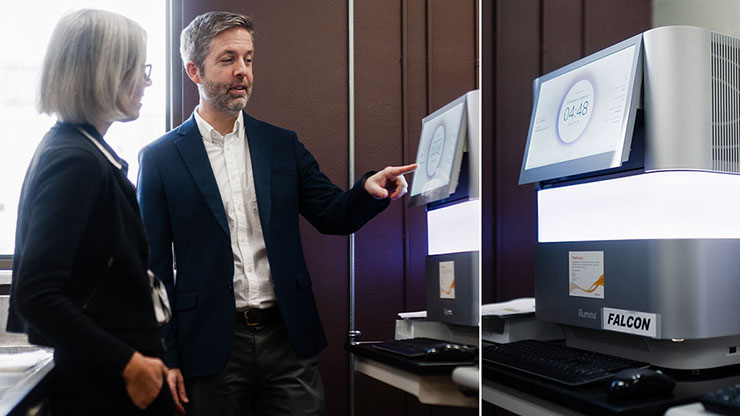
 Pictured (L-R): Dr. Tanya Gillan and Dr. Michael Carter with the genetic sequencing technology funded through the 2021 BMO Ride for Cancer event.
Every BMO Ride for Cancer participant has a reason for riding.
For some, it’s their own cancer journey. For others, it’s a parent, partner, sibling, friend or colleague. But inside the QEII’s Molecular Diagnostics Lab, there’s another perspective on why this event — and the fundraising behind it — matters so much.
It’s seeing the impact firsthand.
“We don’t see patients in the traditional sense, but we see them,” says Dr. Tanya Gillan, QEII molecular geneticist and Clinical Director of the Molecular Diagnostics Lab. “Their cases come across my desk and, especially with blood cancers, we do a lot of follow-up and monitoring. You get to know them through their results and you follow how they’re doing. We feel it here in the lab.”
Dr. Gillan and her colleagues in pathology and molecular diagnostics work largely behind the scenes, analyzing the samples that help diagnose cancer and inform a patient’s care. It’s a part of the cancer journey patients may never see — but one that BMO Ride for Cancer participants have been helping transform for more than a decade.
12 YEARS OF IMPACT AT THE QEII
Since the QEII Foundation’s first BMO Ride for Cancer in 2015, the event has helped fund more than a dozen cancer care projects at the QEII Health Sciences Centre.
For the Molecular Diagnostics Lab, that impact includes the Illumina NextSeq 2000 genetic sequencer funded by the BMO Ride community and QEII Foundation donors in 2021.
In 2022, the QEII became home to this best-in-class genetic sequencing technology, which analyzes tumour samples from patients across Atlantic Canada. The data it provides can help care teams understand how a patient’s cancer might progress and identify the most effective treatment options. For certain patients, that can mean fewer side effects, better outcomes, more clinical trial opportunities and, in some cases, being spared unnecessary treatments.
Dr. Michael Carter, an anatomical and molecular pathologist and Medical Director of the Molecular Diagnostics Lab, has watched the difference that technology has made.
“Donor support through the Ride has really turbocharged our ability to help provide precision medicine and targeted therapies for cancer patients,” says Dr. Carter.
And the impact of that investment continues to grow. The genetic sequencing technology is helping lay the groundwork for what’s next, as the QEII works to bring the next generation of precision oncology tools and capabilities to patients — including liquid biopsy, comprehensive genomic profiling and minimal residual disease monitoring. These are all projects that the BMO Ride community has and will continue to help support.
“Without the NextSeq that was fundraised for us in 2021, none of this would be possible,” says Dr. Carter.
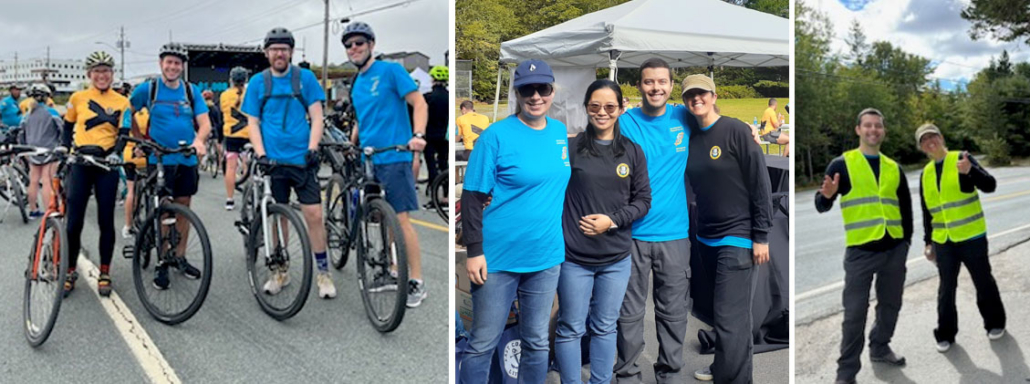
Pictured: Members of the QEII’s Molecular Diagnostics Lab riding and volunteering at past BMO Ride for Cancer event days.
A COMMUNITY BEHIND THEIR WORK
Members of the pathology and molecular diagnostics teams have also been part of the BMO Ride community over the years — as riders, donors and volunteers.
For Dr. Gillan, one BMO Ride event day stands out.
While volunteering, she remembers listening to riders and fellow volunteers talk excitedly about the technology they were helping fund that year — technology destined for her own lab.
To them, it was a cause they believed in. To Dr. Gillan, it was something she knew would make a tangible difference in the work her team could do for patients.
“Just hearing them chat about how cool and amazing it was, and how proud they were of what they were doing — it’s pretty special,” she says. “It’s very humbling to know there are all these Nova Scotians out there donating, riding and advocating for our healthcare teams to have the best technology to help improve cancer care.”
On October 3, BMO Ride for Cancer participants will come together for one final Ride. But inside the QEII’s Molecular Diagnostics Lab, the impact of this community will continue long after the final rider crosses the finish line — in the technology they’ve helped put in place, what’s possible because of it and, most importantly, the difference it will continue to make for cancer patients and their families.
“I think it means a lot to us that people are out there and that they care,” says Dr. Gillan.
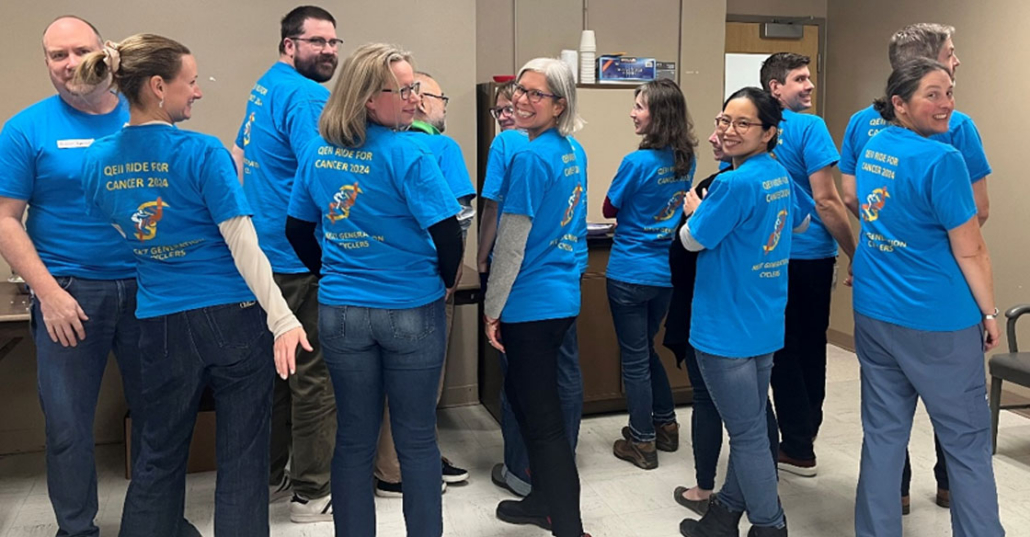
Pictured: Members of the QEII’s Molecular Diagnostics Lab wearing their Next Generation Cyclers team shirts they made for the 2024 BMO Ride for Cancer event.
