OUR 2026 CAUSE
Nova Scotia has the highest cancer rates in all of Canada. Currently, 1 in 2 will be diagnosed in their lifetime and 1 in 3 patients will not survive. That’s why funds raised by our 2026 BMO Ride for Cancer community will support the full spectrum of cancer care at the QEII Health Sciences Centre — strengthening every stage of the journey: earlier diagnosis, more targeted treatment, effective support between appointments, and monitoring that can detect cancer recurrence sooner.
This means advancing cancer-fighting technology and treatment options including:
- Best-in-class diagnostic imaging to detect cancer earlier with greater accuracy, reduce scan times and cut wait times
- Precision oncology tools to help tailor therapies to each patient’s unique genetics
- Surgical robotics and innovation to enable less invasive procedures and faster recoveries
- Digital tools that empower and support patients at home, removing location barriers between appointments
Together, our BMO Ride for Cancer community is helping ensure that every patient who relies on Atlantic Canada’s largest and most specialized cancer treatment hospital has access to world-class care, right here at home.
With every kilometre you ride and every dollar you raise or donate, you’re bringing us closer to a future where these critical projects change and save the lives of Nova Scotians. Ultimately striving to give patients here at home more birthdays, more time with family, and more precious moments.
LASER FOCUS: THE PRECISION ONCOLOGY TOOLS WE’RE RIDING FOR
Minimal Residual Disease Monitoring
Minimal residual disease (MRD) monitoring is a special test used on a patient’s bone marrow or blood samples to detect any tiny traces of cancer that might remain after treatment, particularly in blood cancers. It helps care teams understand if there are still any cancer cells hiding in the body, track how the disease might be progressing, and quickly identify patients who may benefit from a stem cell transplant. MRD monitoring is an important tool for predicting whether certain blood cancers, like leukemia, might come back, and helps oncologists make more personalized decisions about the best targeted treatments and new therapies available for patients.
Comprehensive Genomic Profiling
Comprehensive genomic profiling (CGP) takes cancer care to the next level by analyzing a tumour’s genetic makeup with unprecedented detail. CGP analyzes hundreds of genes at once — far beyond the QEII’s current capabilities — to uncover the specific mutations driving cancer growth. This powerful tool will help care teams better characterize a patient’s tumour, providing valuable information to better guide and personalize treatment.
For patients, CGP means more than just hope — it means targeted treatment options that are more effective and less toxic. By understanding the unique genetic fingerprint of each tumour, oncologists can select therapies that have the highest likelihood to succeed — potentially sparing patients from unnecessary treatments and improving their overall quality of life during their care journey.
$15 MILLION NET RAISED (AND COUNTING!) FOR CANCER CARE IN ATLANTIC CANADA SINCE 2015.
Hosted by the QEII Foundation, BMO Ride for Cancer is laser-focused on funding cancer-fighting equipment, technology and spaces at the QEII Cancer Centre.
It’s all part of our mission to continue to build a QEII centre of excellence in cancer care — impacting nearly every patient who receives care at Atlantic Canada’s largest and most specialized cancer treatment hospital.
Discover the lifesaving impact we’ve made possible since 2015 in our 10-Year-Impact Report:
Since 2015, our BMO Ride for Cancer community has played a critical role in helping to fund many cancer care initiatives across the QEII. Here are some highlights:
LIQUID BIOPSY TECHNOLOGY
Our 2024 event helped fund liquid biopsy technology that — once it has arrived and is implemented — will use a simple blood test to help determine if a patient’s cancer is cured after surgery, if it has returned, and if so, how best to treat it. This has the potential to spare patients from unnecessary treatments, improve survival rates through earlier detection of cancer recurrence, and keep care closer to home. QEII teams are excited for the arrival of this technology and new way of monitoring cancer in our province.
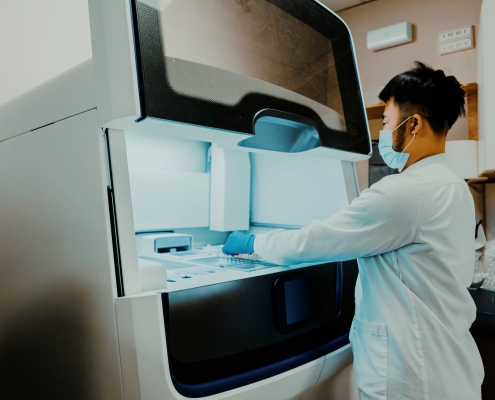
Pictured: An example of potential liquid biopsy technology.
MOLLI
Our BMO Ride community funded tissue marker technology called MOLLI (Magnetic Occult Lesion Localization Instrument) that helps target breast cancer lesions with incredible precision during surgery. With an implant the size of a sesame seed placed within a patient’s tumour, this technology is helping to deliver transformative care for breast cancer patients by funding two MOLLI systems at the QEII, as well as two others at Colchester East Hants Health Centre and Cumberland Regional Health Care Centre to help ensure access in rural communities.
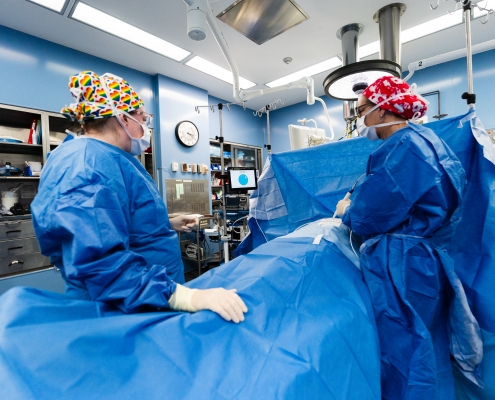
Pictured: Trish Handspiker (left) and Dr. Lucy Helyer with the QEII’s MOLLI surgical technology for breast cancer patients
CAR-T THERAPY LAB
Thanks to BMO Ride, the QEII will soon be home to Atlantic Canada’s first-ever CAR-T therapy lab; a state-of-the-art space dedicated to genetically modifying a patient’s own immune cells (t-cells) to fight against their cancer with unparalleled personalization and accuracy. This revolutionary and lifesaving immunotherapy is a final lifeline and potential cure for certain blood cancer patients who’ve tried all other treatment options.

Pictured: An example of what the QEII’s new CAR-T therapy lab could look like.
PERSONALIZED RADIOTHERAPY TECHNOLOGY FOR RADIATION TREATMENTS
In January 2024, QEII cancer patients began receiving care on the first-in-the-world Ethos radiotherapy system with HyperSight. This groundbreaking technology allows care teams to target tumours while protecting surrounding organs from potential damage. For some patients, this could mean reducing the number of radiation treatment sessions required from the standard 20 down to just five. Watch a sneak peek of this technology in action.

Pictured: Members of the QEII’s cancer care team with the newly-acquired and BMO Ride supported personalized radiotherapy technology
Atlantic Canada’s first surgical robotics technology at the QEII
Atlantic Canada’s first surgical robotics technology for prostate, kidney, gynecological and ear, nose and throat (ENT) cancer surgeries at the QEII. Thanks to our BMO Ride community and QEII Foundation donors, robot-assisted surgery is now a treatment option for certain cancer patients. Healing is faster. Hospital stays are shorter. Normal life resumes sooner. More than 1,600 robotic cancer surgeries have been performed to date at the QEII. View a virtual tour of the surgical robot here.

Pictured: Members of the QEII’s urology team, Dr. Ross Mason (left) and Dr. Ricardo Rendon, who use the surgical robot to perform prostate and kidney cancer surgeries for their patients.
NEW STATE-OF-THE-ART COLPOSCOPES FOR THE QEII’S COLPOSCOPY CLINIC
This minimally-invasive tool helps diagnose and prevent cervical cancer by detecting and treating precancerous cells. With up to 200 Atlantic Canadian patients visiting the clinic each week, the impact of this diagnostic equipment is beyond measure – in some cases, unlocking the ability to stop cervical cancer in its tracks.

Pictured: Members of the QEII’s colposcopy clinic with one of four colposcopes funded by our BMO Ride community.
QEII’s new Cancer Therapy Preparation Lab
Technology and equipment within the QEII’s new Cancer Therapy Preparation Lab; a state-of-the-art space dedicated to the preparation of all drugs for the treatment and support of cancer patients at the QEII. With our BMO Ride community helping to fund innovative technologies within the new lab – like bar-coding, remote-cameras and automation – the QEII’s cancer care team has doubled the number of therapy doses they can prepare each day, reduced treatment times, and enabled new clinical trials.
View a virtual tour of the lab and the wall mural celebrating our BMO Ride community, or watch this video to hear the impact firsthand!

Pictured: Technician, Meghan Davis, stands in front of a BMO Ride-funded biological safety cabinet in the QEII’s new Cancer Therapy Preparation Lab. This cabinet is where critical doses, like chemotherapy, are safely prepared before they’re delivered to QEII patients awaiting systemic therapy treatments
Cutting-edge genetic sequencing technology at the QEII
Cutting-edge genetic sequencing technology at the QEII. In 2022, the QEII became home to a best-in-class genetic sequencing machine, which will analyze the genes of thousands of tumor samples each year. This data informs care teams how a patient’s cancer might progress and the most effective treatment options. Fewer side effects, better outcomes, more clinical trial opportunities, and, in some, cases sparing patients from unnecessary treatments. These are all benefits our BMO Ride community are making possible with this BMO Ride funded technology.

Pictured: The Illumina NextSeq 2000 system; the genetic sequencing machine that the QEII is now home to.
The QEII’s first endobronchial ultrasound (EBUS) technology
The QEII’s first endobronchial ultrasound (EBUS) technology, which provides a safer and less-invasive option for diagnosing lung cancer and lymphoma. Before our BMO Ride community stepped up, Nova Scotia was the only province in Canada that didn’t have EBUS technology. Better diagnoses, reduced risk for patients, less pain, faster recovery times and an extra 100 diagnostic procedures performed each year are all benefits our BMO Ride community helped make possible.

Pictured: QEII respirologist, Dr. Simon Houston, pictured with the EBUS technology funded by our BMO Ride community
Additional apheresis machine for the QEII’s Medical Day Unit
Additional apheresis machine for the QEII’s Medical Day Unit. An apheresis machine separates blood components to treat certain blood cancer patients, and also plays a critical role in stem cell transplants; enabling an additional three transplants to occur each week at the QEII thanks to the increased capacity.

Pictured: A patient undergoes apheresis treatment within the QEII’s Medical Day Unit, thanks to the help of our BMO Ride community.
Chemotherapy pumps, chairs & portable monitoring equipment within the QEII’s Medical Day Unit
Chemotherapy pumps, chemotherapy chairs and portable monitoring equipment within the QEII’s Medical Day Unit. Operating seven days a week, the QEII’s Medical Day Unit is one of the busiest outpatient clinics at the QEII as the primary treatment area for blood cancer patients receiving chemotherapy and supportive care. Our BMO Ride community funded these vital care items, improving the treatment experience and overall comfort for cancer patients.

Pictured: A patient receives cancer treatment within the QEII’s Medical Day Unit


Copyright @ 2026 QEII Foundation. All rights reserved. Charitable Business No: 88646 3496 RR0001